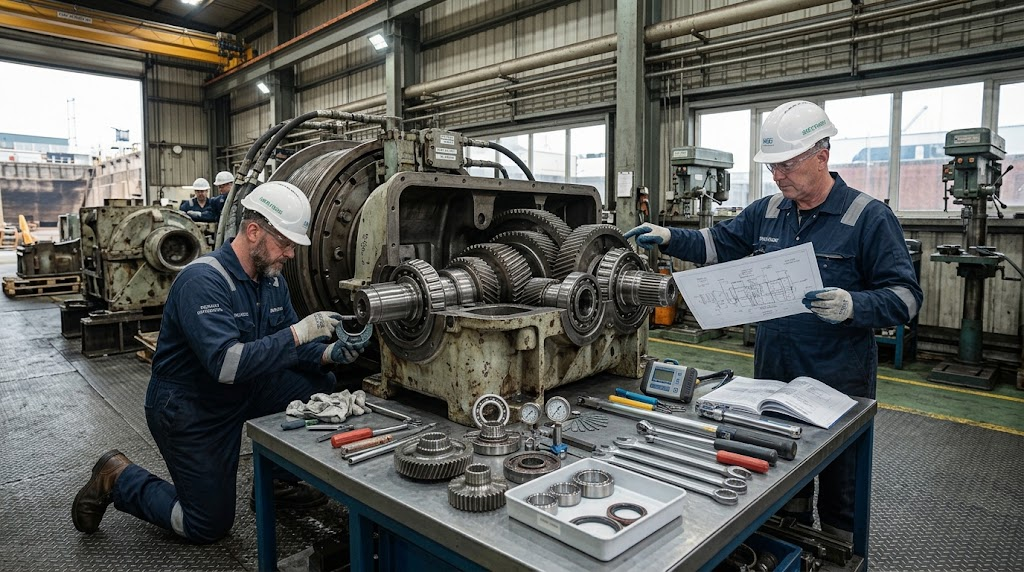
Marine and offshore operations are demanding higher equipment reliability while facing tighter maintenance schedules and rising operational costs. In this environment, Winch Repair and Overhaul plays an important role in keeping critical lifting, mooring, towing, and deck operations running safely.
A winch may operate continuously under heavy loads, vibration, moisture, corrosion, and changing environmental conditions. Therefore, small mechanical or hydraulic problems can quickly develop into serious equipment failures.
For ship owners, vessel operators, shipyards, offshore companies, construction contractors, and mining operators, unexpected winch downtime can disrupt an entire operation. Moreover, emergency repairs often require additional labor, spare parts, and unplanned equipment downtime.
A professional overhaul provides a more structured solution. It allows technicians to inspect internal components, identify wear, repair damaged parts, and restore the winch to reliable operating condition.
This article explains common winch problems, the Winch Repair and Overhaul process, preventive maintenance requirements, and how PT. FIITEK INDONESIA can support marine and industrial equipment reliability.
What Is Winch Repair and Overhaul?
Winch Repair and Overhaul is a comprehensive maintenance process designed to restore the mechanical, hydraulic, and operational performance of winching equipment.
Unlike basic corrective maintenance, an overhaul normally involves a deeper inspection. Technicians may dismantle major components and examine their condition individually.
The scope depends on the winch type, operating history, equipment condition, and application.
Marine Winches Commonly Requiring Overhaul
Marine and offshore facilities use different winch configurations for specific tasks.
Common examples include:
- Mooring winches
- Towing winches
- Anchor handling winches
- Tugger winches
- Cargo winches
- Deck winches
- Traction winches
- Hydraulic winches
- Electric winches
- Crane and lifting winches
Mechanical and Hydraulic Systems
A winch combines several systems that must work together.
These may include drums, shafts, gears, bearings, brakes, clutches, couplings, hydraulic motors, pumps, valves, and control components.
Consequently, technicians must evaluate the complete system rather than focus on a single failed component.
Common Winch Problems in Marine and Offshore Operations
Winch failures rarely occur without warning. In many cases, changes in sound, vibration, temperature, speed, or load behavior provide early indications of developing problems.
Excessive Gear and Bearing Wear
Gears and bearings experience continuous mechanical stress during operation.
Over time, inadequate lubrication, contamination, misalignment, and excessive loading can accelerate wear.
Technicians should inspect gear teeth, bearing surfaces, shafts, and related components during a major overhaul.
Hydraulic Leakage and Pressure Loss
Hydraulic winches depend on stable hydraulic pressure and controlled fluid flow.
Damaged seals, hoses, valves, pumps, or motors can cause leakage and performance loss.
Therefore, hydraulic inspection should form part of a comprehensive winch service program.
Brake Performance Problems
The brake system represents a critical part of many marine winches.
A worn brake lining, contaminated surface, incorrect adjustment, or damaged mechanical component can affect holding performance.
For this reason, technicians should inspect brake components carefully and verify their operation during testing.
Corrosion and Environmental Damage
Marine environments expose equipment to saltwater, humidity, and corrosive contaminants.
Corrosion can affect housings, shafts, fasteners, drums, hydraulic fittings, and other components.
Early corrosion treatment can help prevent more extensive structural and mechanical damage.
Abnormal Noise and Vibration
Unusual noise can indicate gear damage, bearing wear, misalignment, insufficient lubrication, or loose components.
Similarly, excessive vibration may indicate mechanical imbalance or alignment problems.
Therefore, operators should investigate abnormal operating behavior instead of continuing normal operation without inspection.
The Winch Repair and Overhaul Process
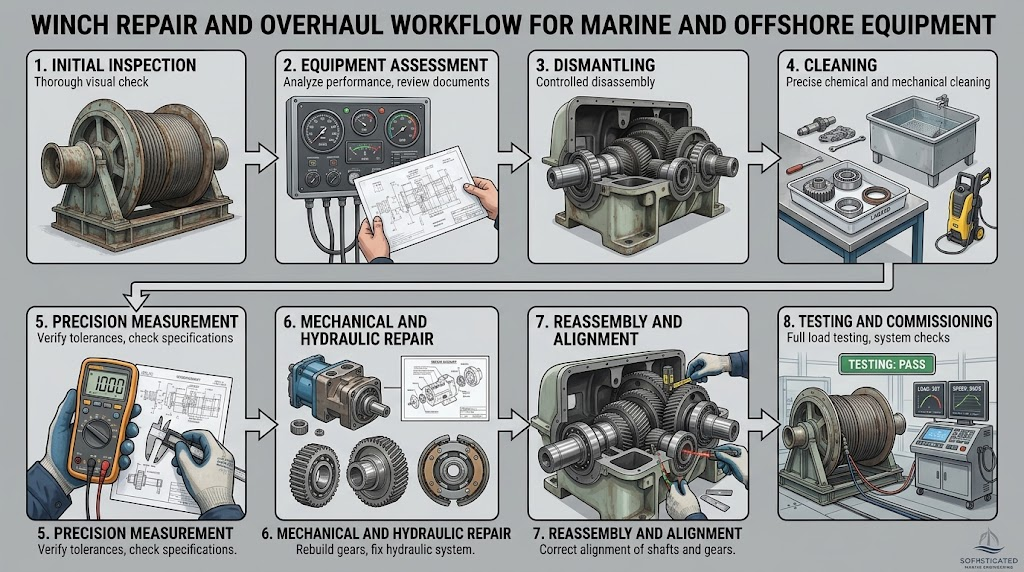
A successful overhaul requires systematic planning and technical execution.
PT. FIITEK INDONESIA can structure the service according to the winch design, operating environment, equipment condition, and customer requirements.
1. Initial Inspection and Technical Assessment
The first stage involves understanding the equipment and its operating history.
Technicians review available maintenance records and inspect the winch externally.
They may examine:
- Hydraulic connections
- Gearbox condition
- Brake assembly
- Winch drum
- Structural components
- Motor condition
- Couplings
- Mounting points
- Oil leakage
- Abnormal noise or vibration
Identifying the Root Cause
The objective is not simply to identify the failed component.
Instead, technicians should determine why the failure occurred.
For example, repeated bearing damage may result from misalignment, inadequate lubrication, contamination, or excessive loading.
Identifying the underlying cause helps prevent recurring failures.
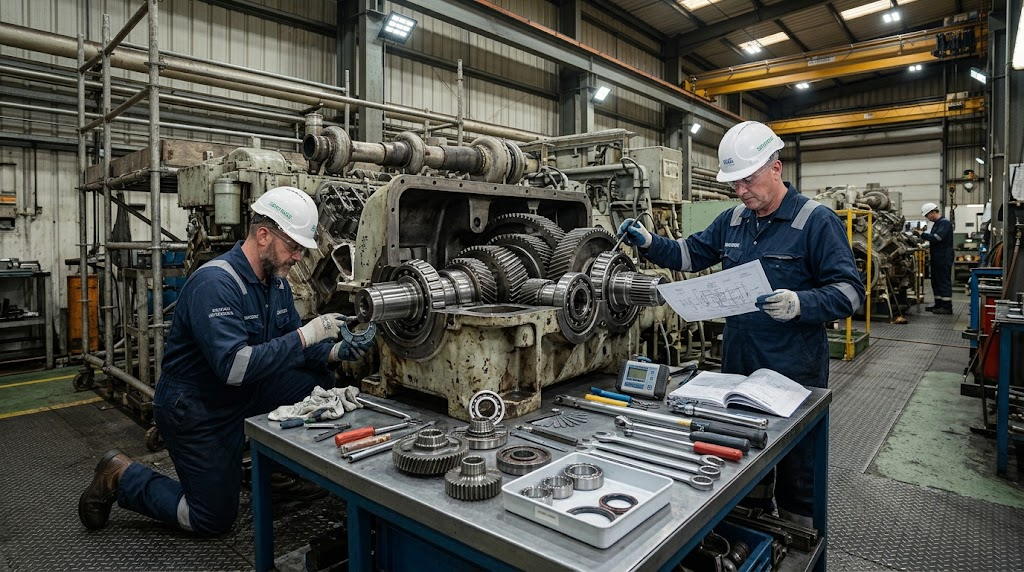
2. Dismantling and Component Identification
After defining the overhaul scope, technicians dismantle the winch carefully.
Each component should receive proper identification and protection.
This process helps prevent component mix-ups during reassembly.
It also allows technicians to document the condition of individual parts.
3. Cleaning and Detailed Inspection
Technicians clean dismantled components before performing detailed inspections.
Oil deposits, dirt, corrosion products, and other contaminants can hide mechanical defects.
After cleaning, technicians inspect gears, shafts, bearings, seals, brakes, couplings, drums, and other components.
4. Precision Measurement and Evaluation
Measurement provides objective information about component condition.
Technicians can measure critical dimensions, clearances, shaft conditions, bearing fits, and other relevant parameters.
Repair or Replace?
Not every worn component requires immediate replacement.
Technicians evaluate the condition against applicable technical requirements and determine whether a component should be reused, repaired, reconditioned, or replaced.
This approach can help control maintenance costs while maintaining equipment reliability.
5. Mechanical Repair and Reconditioning
The repair stage addresses identified defects.
Depending on the winch condition, work may include:
- Bearing replacement
- Gear inspection and repair
- Shaft reconditioning
- Seal replacement
- Brake servicing
- Coupling inspection
- Fastener replacement
- Corrosion treatment
- Lubrication system servicing
- Drum inspection
- Mechanical alignment
The exact scope should reflect the equipment’s technical condition rather than follow a one-size-fits-all procedure.
6. Hydraulic System Inspection
Hydraulic winches require additional attention because hydraulic performance directly affects speed, torque, and control.
Technicians can inspect hydraulic motors, pumps, valves, hoses, fittings, seals, and related components.
They may also investigate abnormal pressure, leakage, temperature, or flow conditions.
Hydraulic Fluid Condition
Clean hydraulic fluid is essential for reliable hydraulic operation.
Contaminated fluid can damage precision components and accelerate wear.
Therefore, hydraulic cleanliness should remain part of the maintenance strategy after overhaul.
7. Reassembly and Alignment
After repair, technicians reassemble the winch according to appropriate procedures.
Correct component installation matters greatly.
Incorrect clearances, torque, lubrication, or alignment can create new problems after commissioning.
Therefore, technicians should verify critical assembly points before testing.
8. Testing and Commissioning
Testing confirms whether the repaired winch operates correctly.
The testing scope depends on equipment type and application.
Possible checks include:
- Functional operation
- Brake operation
- Hydraulic pressure
- Leakage inspection
- Rotation and speed
- Control response
- Load-related performance
- Abnormal vibration
- Abnormal noise
The objective is to confirm stable and controlled operation before the equipment returns to service.
Benefits of Professional Winch Repair and Overhaul
A structured overhaul can provide several operational and maintenance benefits.
Improved Reliability
Regular inspection identifies worn components before they create major operational problems.
Therefore, operators can address developing defects during planned maintenance periods.
Extended Equipment Service Life
Reconditioning suitable components can help extend the useful service life of a winch.
Moreover, proper maintenance can reduce unnecessary replacement of complete assemblies.
Reduced Unplanned Downtime
Planned overhaul allows maintenance teams to coordinate labor, spare parts, workshop resources, and vessel schedules.
As a result, operators can better manage maintenance interruptions.
Improved Operational Safety
Winches often handle heavy loads.
Therefore, reliable brakes, gears, bearings, hydraulic systems, and structural components are important for controlled operation.
Regular technical inspection supports safer equipment management.
Better Maintenance Cost Planning
Emergency failures can create unpredictable costs.
A planned Winch Repair and Overhaul program provides maintenance teams with greater visibility into upcoming repair requirements.
This can support more effective budgeting and procurement planning.
Winch Applications Across Marine and Industrial Sectors
Winches are not limited to conventional commercial vessels.
Shipping and Marine Operations
Commercial vessels use winches for mooring, towing, anchoring, cargo handling, and deck operations.
Reliable winch performance therefore contributes to efficient vessel operations.
Offshore Operations
Offshore vessels and facilities often use specialized winches for anchor handling, towing, lifting, and subsea-related activities.
These applications can expose equipment to high loads and demanding environmental conditions.
Consequently, maintenance planning becomes especially important.
Construction
Construction projects may use winches for material handling, lifting, positioning, and other heavy-duty applications.
Frequent operation can accelerate mechanical wear.
Therefore, regular inspection can help maintain equipment availability.
Mining
Mining environments create demanding operating conditions.
Dust, heavy loads, vibration, and continuous operation can affect mechanical equipment.
A structured overhaul program can help mining operators identify component deterioration before it causes significant downtime.
Why Choose PT. FIITEK INDONESIA?
Selecting a capable technical partner is important when maintaining critical equipment.
PT. FIITEK INDONESIA supports marine, offshore, construction, and industrial customers with engineering-focused repair and maintenance solutions.
Comprehensive Technical Assessment
Each winch has its own operating history and condition.
Therefore, PT. FIITEK INDONESIA approaches overhaul work by evaluating the actual equipment condition and service requirements.
Integrated Mechanical and Hydraulic Support
Many modern winches combine mechanical and hydraulic technologies.
A comprehensive service approach allows technicians to consider the interaction between these systems.
Quality-Focused Workmanship
Winch overhaul requires careful dismantling, inspection, measurement, repair, reassembly, and testing.
Attention to each stage helps support consistent service quality.
Support for Critical Marine Equipment
Ship owners and offshore operators often need maintenance partners who understand the importance of operational schedules.
PT. FIITEK INDONESIA can support planned service activities with a structured technical approach.
Flexible Service Scope
Not every winch requires the same overhaul scope.
Therefore, the service can be aligned with equipment type, condition, operating environment, maintenance history, and customer requirements.
Why Preventive Winch Maintenance Matters
An overhaul restores equipment condition, but preventive maintenance helps preserve that condition.
Operators should therefore establish a maintenance program after completing major repair work.
Routine Visual Inspection
Operators should check for:
- Hydraulic leaks
- Oil leakage
- Corrosion
- Loose components
- Damaged hoses
- Abnormal noise
- Brake abnormalities
- Drum or wire-rope issues
Early detection can prevent small defects from becoming major failures.
Lubrication Management
Proper lubrication reduces friction and helps control mechanical wear.
Maintenance teams should use suitable lubricants and follow the equipment’s maintenance requirements.
Moreover, contaminated or degraded lubricant should receive prompt attention.
Hydraulic System Monitoring
Hydraulic pressure, temperature, fluid cleanliness, and leakage can provide useful indicators of system condition.
Therefore, operators should monitor changes rather than wait for complete system failure.
Brake Inspection
Brake condition deserves particular attention on lifting and mooring equipment.
Maintenance teams should inspect wear, adjustment, contamination, and operational performance according to the applicable equipment requirements.
When Should You Schedule Winch Repair and Overhaul?
The correct overhaul interval depends on equipment design, operating hours, load profile, environmental conditions, and maintenance history.
However, certain symptoms indicate that a technical inspection may be necessary.
These include:
- Increasing vibration
- Unusual mechanical noise
- Hydraulic leakage
- Reduced pulling performance
- Irregular winch speed
- Brake problems
- Excessive temperature
- Repeated component failures
- Gearbox abnormalities
- Excessive bearing wear
- Corrosion
- Unexpected pressure changes
When these symptoms appear, operators should investigate the cause promptly.
Waiting until complete equipment failure can increase repair complexity and operational disruption.
Building a Long-Term Winch Reliability Strategy
Modern asset management increasingly focuses on equipment lifecycle performance.
Instead of relying exclusively on corrective repairs, operators can combine routine inspection, preventive maintenance, condition monitoring, and scheduled overhaul.
This approach provides a more structured maintenance framework.
Moreover, every overhaul can generate useful information.
Maintenance teams can use inspection findings to identify recurring issues such as poor lubrication, contamination, misalignment, excessive loading, or component aging.
Consequently, the next maintenance cycle can become more targeted and efficient.
Conclusion: Keep Your Winch Ready for Critical Operations
Reliable winches are essential for many marine, offshore, construction, and mining operations.
Professional Winch Repair and Overhaul helps operators identify component wear, repair mechanical and hydraulic problems, restore performance, and extend equipment service life.
However, overhaul should form part of a broader maintenance strategy. Regular inspection, proper lubrication, hydraulic monitoring, brake inspection, and condition monitoring can help preserve equipment reliability between major overhaul intervals.
For ship owners, ship management companies, offshore operators, shipyards, marine engineers, vessel operators, procurement teams, and industrial companies, PT. FIITEK INDONESIA provides an engineering-focused approach to winch repair, overhaul, and maintenance requirements.
Is your winch showing signs of wear, leakage, vibration, or reduced performance? Contact PT. FIITEK INDONESIA to discuss your Winch Repair and Overhaul requirements and develop a service scope based on your equipment condition and operational needs.
STAY IN THE LOOP
Subscribe to our free newsletter.
Leave A Comment

Marine and offshore operations face increasing pressure to improve equipment reliability, reduce downtime, and control maintenance costs. At the same time, vessels and industrial equipment operate in demanding environments where mechanical components face heavy loads, vibration, corrosion, heat, and continuous operation. In this environment, Marine Machinery Overhaul plays an important role in maintaining equipment performance

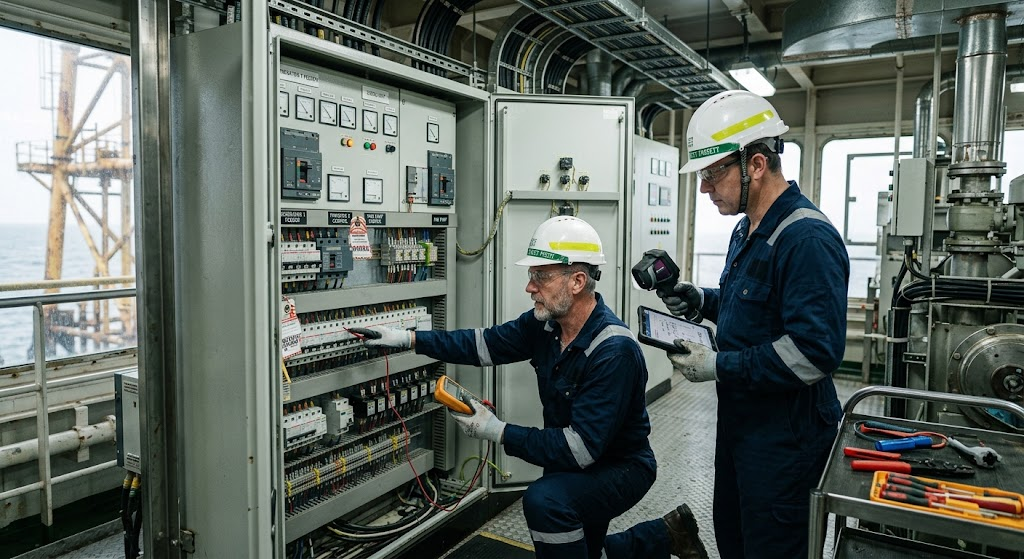
Modern marine and offshore operations depend on electrical systems more than ever. From generators and switchboards to motors, control panels, navigation equipment, cranes, and emergency systems, electrical power keeps critical assets operating. However, harsh offshore conditions can accelerate electrical deterioration. Therefore, professional Offshore Electrical Maintenance has become essential for companies that want to protect safety,
-
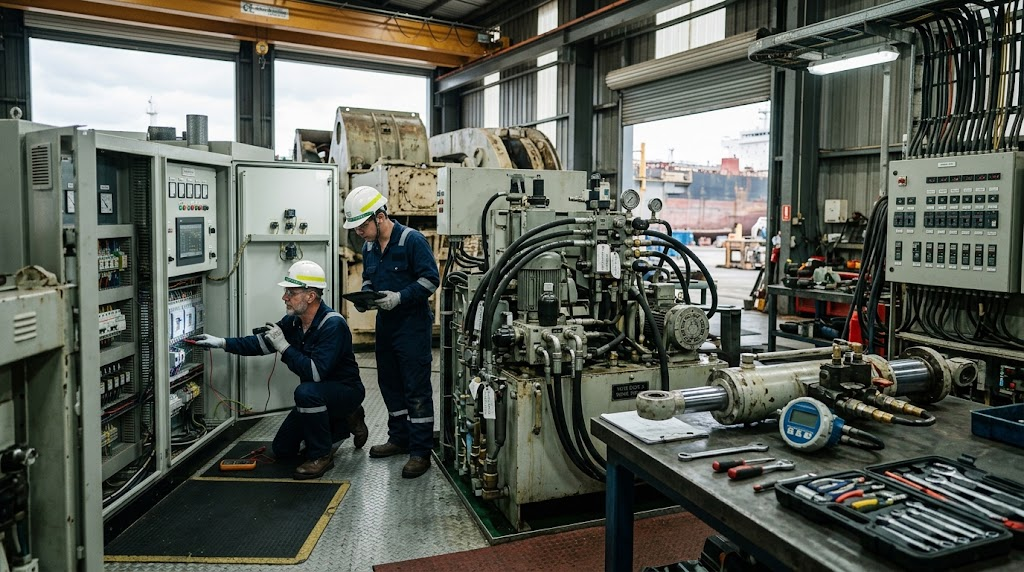
Modern marine and offshore operations demand more than powerful machinery. They require Hydraulic & Electrical System Services that keep critical equipment safe, responsive, and operational under demanding conditions. From ship deck cranes and winches to hydraulic power units, control panels, motors, and industrial machinery, system reliability directly affects productivity and operational safety. At the same
-
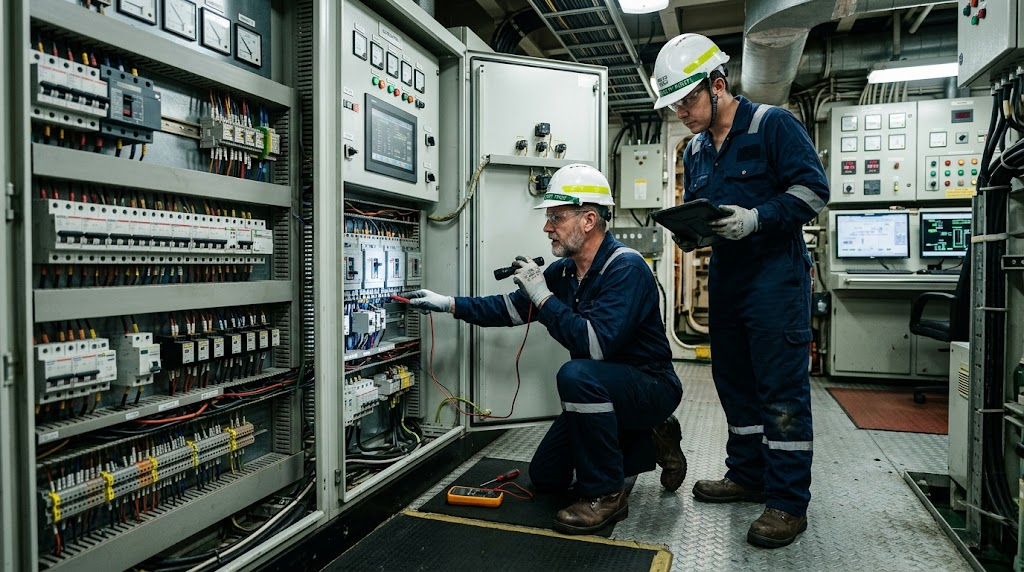
Modern vessels and offshore facilities are becoming more electrically dependent than ever. From navigation and communication systems to propulsion support, automation, lighting, power distribution, and safety equipment, electrical systems now play a central role in operational reliability. Marine Electrical Services are therefore no longer simply a maintenance requirement—they are a critical part of vessel safety,