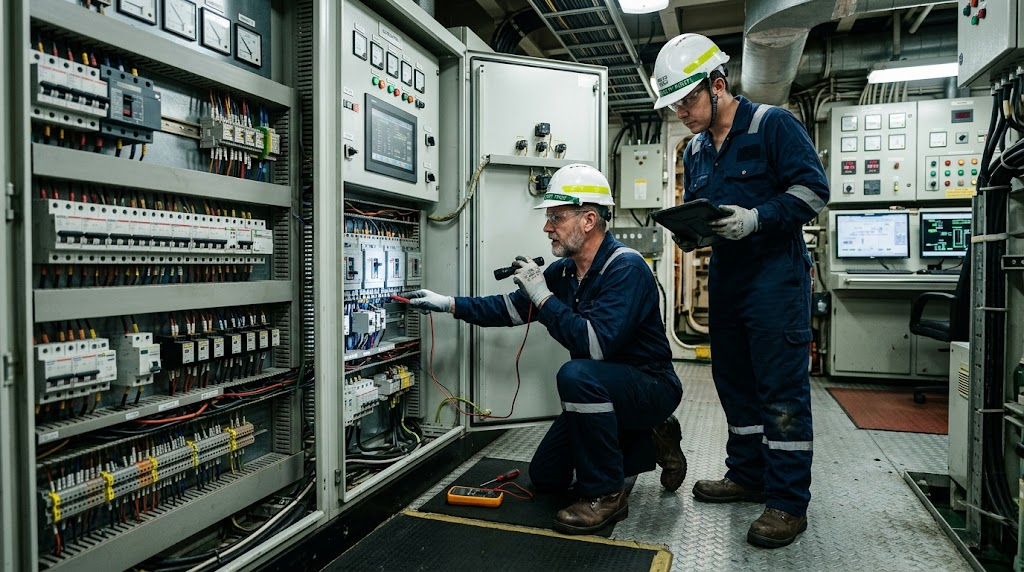
Modern vessels and offshore facilities are becoming more electrically dependent than ever. From navigation and communication systems to propulsion support, automation, lighting, power distribution, and safety equipment, electrical systems now play a central role in operational reliability. Marine Electrical Services are therefore no longer simply a maintenance requirement—they are a critical part of vessel safety, efficiency, and business continuity.
For ship owners, vessel operators, shipyards, offshore companies, and industrial project managers, electrical failure can quickly become an operational and financial problem. Equipment downtime, failed control systems, damaged wiring, power instability, and inadequate preventive maintenance can delay projects and increase repair costs.
PT. FIITEK INDONESIA provides professional marine electrical engineering solutions designed to support vessels, offshore facilities, shipyards, construction projects, and industrial operations. This article explores the importance of marine electrical systems, common technical challenges, marine electrical repair requirements, wiring services, inspection and maintenance practices, and how professional electrical engineering support can improve operational reliability.
Why Marine Electrical Systems Matter
Marine electrical systems operate in one of the world’s most demanding environments. Saltwater exposure, humidity, vibration, temperature changes, mechanical stress, limited access, and continuous operation can accelerate electrical degradation.
Unlike many land-based industrial systems, marine electrical installations must also consider vessel movement, space limitations, electromagnetic interference, corrosion, and strict safety requirements.
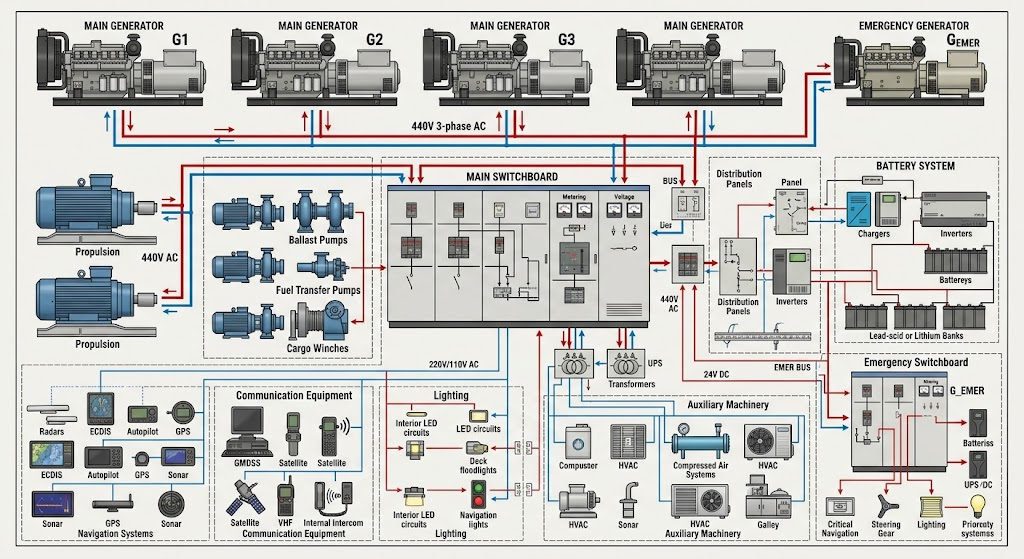
A reliable electrical system supports critical functions such as:
- Main and emergency power distribution
- Switchboards and electrical panels
- Motor control systems
- Navigation and communication equipment
- Lighting systems
- Alarm and monitoring systems
- Pumps and auxiliary machinery
- HVAC and ventilation equipment
- Battery and charging systems
- Automation and control systems
- Deck machinery and lifting equipment
- Offshore electrical infrastructure
A small electrical defect can sometimes develop into a much larger operational problem. For this reason, electrical inspection, preventive maintenance, troubleshooting, and timely repair should be integrated into an asset’s overall maintenance strategy.
Common Challenges in Marine Electrical Systems
1. Corrosion and Moisture
Saltwater and humid environments are among the biggest threats to marine electrical equipment.
Corrosion can affect:
- Cable terminals
- Electrical connectors
- Switchboards
- Junction boxes
- Motor components
- Circuit breakers
- Control panels
- Grounding connections
Why Corrosion Requires Early Intervention
Corrosion increases electrical resistance and can weaken connections. In severe cases, it may contribute to overheating, insulation failure, short circuits, or equipment malfunction.
Professional inspection allows technicians to identify corrosion before it develops into a major failure.
2. Cable and Wiring Deterioration
Marine cables are exposed to vibration, heat, moisture, mechanical movement, and chemicals. Damaged insulation or poorly secured cables can create serious reliability and safety concerns.
A professional marine wiring service should assess:
- Cable insulation condition
- Cable routing
- Cable support and securing
- Terminal connections
- Junction boxes
- Cable glands
- Continuity
- Insulation resistance
- Grounding and bonding
- Correct Cable Routing Matters
Marine cables must be properly routed and protected from mechanical damage, excessive heat, water ingress, and interference with moving machinery.
Poor routing can also make future troubleshooting more difficult and increase maintenance time.
3. Electrical Overload and Power Instability
Electrical loads can change significantly depending on vessel operations.
Starting large motors, operating cranes, running pumps, or switching multiple systems simultaneously can create high electrical demand.
Potential symptoms include:
- Voltage fluctuations
- Circuit breaker trips
- Motor overheating
- Unexpected shutdowns
- Flickering lights
- Control-system faults
- Generator instability
A professional electrical assessment can help determine whether the problem originates from load distribution, damaged components, inadequate connections, or another underlying issue.
4. Aging Electrical Equipment
Many vessels and industrial assets remain operational for decades. As equipment ages, components can become obsolete or difficult to source.
Typical aging problems include:
- Degraded insulation
- Worn contactors
- Faulty relays
- Aging circuit breakers
- Damaged switches
- Obsolete control components
- Deteriorated cables
- Electrical panel contamination
A planned maintenance strategy can help extend equipment service life while reducing unexpected downtime.
Our Marine Electrical Services
PT. FIITEK INDONESIA can support a broad range of marine and industrial electrical requirements, from troubleshooting and repair to inspection, maintenance, and system improvement.
Marine Electrical Inspection & Troubleshooting
Electrical troubleshooting begins with identifying the actual cause of a failure rather than simply replacing components.
Our technicians can investigate issues involving:
- Power distribution
- Motors
- Control panels
- Switchboards
- Lighting
- Navigation-related electrical systems
- Pumps
- Alarm systems
- Electrical machinery
- Automation interfaces
Systematic Fault Finding
A structured troubleshooting process can include:
- Visual inspection
- Review of electrical diagrams
- Voltage and current measurements
- Continuity testing
- Insulation testing
- Terminal and connection inspection
- Component testing
- Fault isolation
- Repair or replacement
- Functional testing
This approach helps reduce unnecessary component replacement and improves the reliability of the final repair.
Marine Electrical Repair
Marine electrical repair is essential when electrical equipment experiences malfunction, physical damage, overheating, corrosion, or component failure.
Repair activities may include:
- Electrical panel repair
- Switchboard troubleshooting
- Cable repair and replacement
- Motor electrical troubleshooting
- Circuit breaker replacement
- Relay and contactor replacement
- Terminal repair
- Electrical connection restoration
- Control circuit troubleshooting
- Emergency electrical repair
The objective is not simply to restore power. The repair should address the underlying fault and verify that the system operates safely after intervention.
Marine Wiring Service
A reliable marine wiring service requires more than connecting cables. Proper installation and maintenance require attention to cable selection, routing, protection, termination, identification, and testing.
Marine wiring work may cover:
- New cable installation
- Cable replacement
- Cable routing
- Cable termination
- Junction box installation
- Cable gland installation
- Control wiring
- Power wiring
- Instrumentation wiring
- Panel wiring
- Cable identification and labeling
Cable Management and Documentation
Good cable management makes future inspection and troubleshooting significantly easier.
Clear labeling and organized routing help technicians identify circuits faster, reduce maintenance time, and minimize the risk of incorrect connections.
Offshore Electrical Services
Offshore environments create additional challenges for electrical systems.
Equipment may operate continuously in environments characterized by salt spray, high humidity, vibration, restricted access, and demanding safety requirements.
Offshore electrical services may support:
- Offshore platforms
- Jack-up units
- Accommodation vessels
- Workboats
- Offshore support vessels
- Construction vessels
- Industrial offshore facilities
- Deck machinery
- Pumps and auxiliary systems
- Electrical control equipment
Electrical Reliability in Offshore Operations
For offshore operators, equipment downtime can have a much greater impact than a conventional maintenance interruption.
An electrical failure can potentially affect:
- Production
- Lifting operations
- Communications
- Navigation
- Accommodation systems
- Machinery availability
- Safety systems
- Project schedules
This makes preventive electrical maintenance an important part of offshore asset management.
Marine Electrical Maintenance Strategy
Preventive maintenance is generally more effective than waiting for electrical failure.
A practical maintenance program should combine inspection, testing, cleaning, tightening, component evaluation, and documentation.
Recommended Maintenance Activities
Routine Inspection
Technicians should look for:
- Burn marks
- Loose terminals
- Corrosion
- Cracked insulation
- Overheated components
- Unusual noise
- Abnormal vibration
- Moisture ingress
- Damaged cable glands
Electrical Testing
Depending on the equipment and maintenance requirements, testing may include:
- Voltage measurement
- Current measurement
- Continuity testing
- Insulation resistance testing
- Grounding checks
- Phase sequence verification
- Functional testing
- Protective-device testing
Cleaning and Connection Maintenance
Dust, oil, salt deposits, and moisture can contribute to electrical problems.
Cleaning electrical equipment and checking terminal tightness can help prevent avoidable failures.
The Role of IMO and Marine Safety Requirements
Marine electrical engineering must operate within a broader regulatory and safety framework.
The International Maritime Organization (IMO) establishes international requirements and conventions affecting maritime safety and environmental performance. Depending on vessel type, equipment, flag-state requirements, classification requirements, and operational profile, additional standards and rules may apply.
Electrical systems can be connected directly or indirectly to safety-critical functions, including:
- Emergency power
- Navigation
- Fire detection and alarm systems
- Communication systems
- Machinery monitoring
- Emergency lighting
- Safety equipment
Why Compliance Matters
Compliance should not be treated simply as paperwork.
Proper electrical inspection and maintenance help operators demonstrate that equipment is being maintained systematically and that safety-critical systems remain operational.
Ship owners and technical managers should therefore consider applicable:
- IMO requirements
- Flag-state regulations
- Classification society rules
- Manufacturer recommendations
- Vessel-specific maintenance procedures
- Occupational health and safety requirements
Because requirements vary according to vessel and project, electrical work should be planned around the applicable technical documentation and authority requirements.
Technology and the Future of Marine Electrical Engineering
Marine electrical engineering is evolving alongside vessel automation and digitalization.
Modern vessels increasingly rely on integrated monitoring, automation, electronic control systems, and data-driven maintenance.
Condition-Based Maintenance
Instead of relying only on fixed maintenance intervals, operators can increasingly monitor equipment condition and identify developing problems.
Relevant indicators may include:
- Temperature
- Current
- Voltage
- Vibration
- Insulation condition
- Alarm history
- Equipment operating hours
From Reactive to Predictive Maintenance
The goal is to move from:
Failure → Emergency Repair
toward:
Monitoring → Early Detection → Planned Intervention → Reduced Downtime
This approach can improve maintenance planning and help technical teams prioritize the assets with the highest operational risk.
Why Choose Professional Marine Electrical Technicians?
Marine electrical systems require specialized knowledge because the environment and operational requirements differ from ordinary commercial installations.
A qualified marine electrical technician should understand both electrical principles and the practical requirements of marine equipment.
Professional technicians can provide:
- Structured troubleshooting
- Safe electrical testing
- Correct component identification
- Proper cable termination
- Systematic fault isolation
- Preventive maintenance
- Functional verification
- Technical reporting
Safety Comes First
Electrical maintenance should always follow appropriate isolation, testing, and safety procedures.
Before work begins, technicians should identify potential electrical hazards and ensure that equipment is appropriately isolated according to the applicable safety procedure.
Why PT. FIITEK INDONESIA?
PT. FIITEK INDONESIA is positioned to support marine, offshore, construction, mining, and industrial customers with practical engineering and maintenance solutions.
Our approach focuses on:
- Technical reliability
- Professional workmanship
- Systematic troubleshooting
- Safety-conscious service
- Practical maintenance solutions
- Responsive technical support
- Long-term equipment performance
Whether the requirement involves troubleshooting a failed electrical panel, repairing marine wiring, inspecting electrical systems, or supporting offshore equipment, professional technical assessment is essential to achieving a reliable result.
Conclusion: Building More Reliable Marine Electrical Systems
Electrical systems are the backbone of modern marine and offshore operations. As vessels become more automated and electrically dependent, the importance of reliable electrical engineering continues to increase.
From marine electrical repair and wiring services to preventive maintenance, troubleshooting, offshore electrical support, and system testing, a proactive approach can help reduce downtime, improve safety, and protect the long-term value of marine assets.
For ship owners, vessel operators, shipyards, offshore companies, marine engineers, procurement teams, and industrial operators, choosing the right Marine Electrical Services partner can make a significant difference in operational reliability.
PT. FIITEK INDONESIA is ready to support your marine and industrial electrical requirements with practical, professional, and engineering-focused solutions.
Need Reliable Marine Electrical Services?
Contact PT. FIITEK INDONESIA to discuss your vessel, offshore, construction, mining, or industrial electrical requirements.
Talk to our technical team today and plan your next marine electrical inspection, repair, maintenance, or engineering project with confidence.
STAY IN THE LOOP
Subscribe to our free newsletter.
Leave A Comment

Modern marine and offshore operations depend on electrical systems more than ever. From generators and switchboards to motors, control panels, navigation equipment, cranes, and emergency systems, electrical power keeps critical assets operating. However, harsh offshore conditions can accelerate electrical deterioration. Therefore, professional Offshore Electrical Maintenance has become essential for companies that want to protect safety,

Modern marine and offshore operations demand more than powerful machinery. They require Hydraulic & Electrical System Services that keep critical equipment safe, responsive, and operational under demanding conditions. From ship deck cranes and winches to hydraulic power units, control panels, motors, and industrial machinery, system reliability directly affects productivity and operational safety. At the same
-
In marine, offshore, construction, and mining operations, cranes are essential for lifting, material handling, cargo movement, and other heavy-duty applications. Crane Repair and Service is therefore an important part of maintaining safe, reliable, and efficient lifting equipment. Regular inspection, preventive maintenance, troubleshooting, repair, and overhaul can help identify equipment problems before they develop into major

In high-stakes marine, offshore, construction, and mining operations, reliable lifting equipment is vital to maintaining productivity and operational safety. Specialized Crane Repair and Maintenance Services are essential to ensuring continuous performance—especially when machinery is exposed to heavy loads, continuous operation, vibration, saltwater corrosion, and harsh weather. Marine and offshore cranes are sophisticated machines integrating mechanical,