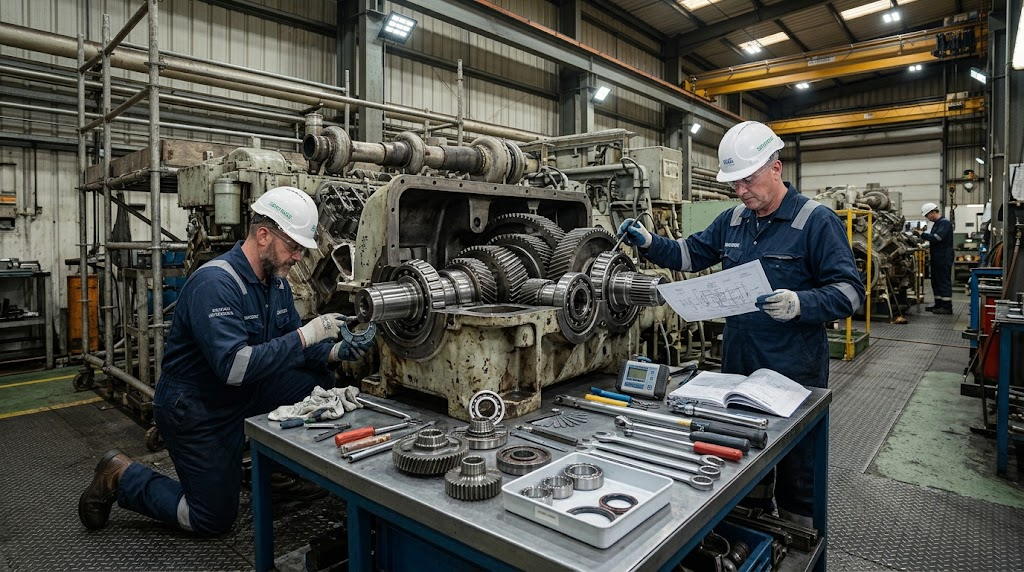
Marine and offshore operations face increasing pressure to improve equipment reliability, reduce downtime, and control maintenance costs. At the same time, vessels and industrial equipment operate in demanding environments where mechanical components face heavy loads, vibration, corrosion, heat, and continuous operation. In this environment, Marine Machinery Overhaul plays an important role in maintaining equipment performance and operational reliability.
For ship owners, vessel operators, shipyards, offshore companies, and industrial teams, machinery failure can create more than an unexpected repair bill. It can interrupt operations, delay projects, increase maintenance costs, and affect overall productivity.
However, replacing complete machinery is not always the most practical solution. A properly planned overhaul can restore critical components, identify hidden defects, and extend equipment service life.
PT. FIITEK INDONESIA provides professional machinery overhaul solutions for marine, offshore, construction, and industrial applications. This article explains the importance of machinery overhaul, common equipment problems, the overhaul process, preventive maintenance strategies, and how a structured service approach can support long-term equipment reliability.
What Is Marine Machinery Overhaul?
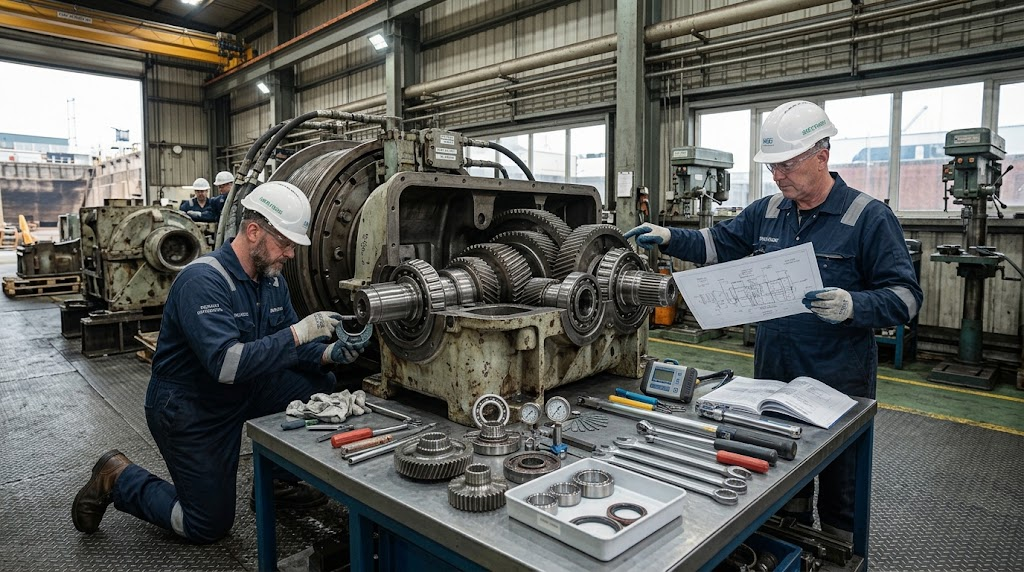
Marine Machinery Overhaul is a comprehensive maintenance process that involves inspecting, dismantling, cleaning, repairing, replacing, reassembling, and testing machinery or major mechanical components.
Unlike routine maintenance, an overhaul provides a deeper examination of equipment condition. Therefore, technicians can investigate internal components that may not be accessible during normal inspections.
Why Machinery Overhaul Matters
Marine machinery often works under demanding conditions. Continuous operation can gradually reduce component performance.
For example, bearings can wear, shafts can develop surface damage, seals can deteriorate, and gears can lose their correct operating condition.
An overhaul allows technicians to address these issues before they develop into major failures.
Typical Objectives of an Overhaul
A professional overhaul may aim to:
- Restore mechanical performance
- Identify worn or damaged components
- Replace defective parts
- Reduce unexpected equipment failure
- Improve operational reliability
- Extend machinery service life
- Support planned maintenance schedules
- Reduce long-term repair costs
- Verify equipment condition through testing
Moreover, a structured overhaul provides valuable information about the actual condition of machinery. This information can help maintenance teams plan future inspections and spare-part requirements.
Common Machinery Problems in Marine and Offshore Operations
Marine and offshore equipment operates in environments that can accelerate mechanical degradation. Consequently, maintenance teams must monitor equipment condition carefully.
Wear and Tear on Mechanical Components
Bearings, gears, bushes, couplings, shafts, and other moving components experience repeated mechanical loads.
Over time, this movement can create excessive clearance, vibration, noise, and reduced efficiency.
In addition, improper lubrication can accelerate component wear. Therefore, technicians should inspect lubrication systems and related components during an overhaul.
Corrosion and Environmental Damage
Saltwater, humidity, chemicals, and harsh offshore conditions can contribute to corrosion.
Corrosion can affect housings, shafts, fasteners, hydraulic components, and other exposed parts. If technicians overlook corrosion during routine maintenance, the damage can progress further.
During Marine Machinery Overhaul, technicians can inspect affected components more closely and determine whether cleaning, refurbishment, machining, or replacement is appropriate.
Leakage and Seal Failure
Hydraulic and mechanical equipment often depends on seals to maintain pressure and prevent contamination.
Damaged seals can cause oil leakage, pressure loss, contamination, and inefficient operation. As a result, seal inspection should form part of an appropriate overhaul program.
Excessive Vibration and Noise
Unusual vibration or noise can indicate mechanical problems.
Potential causes include:
- Bearing wear
- Misalignment
- Shaft problems
- Gear damage
- Loose components
- Coupling problems
- Imbalance
- Lubrication issues
Therefore, technicians should not treat abnormal vibration as a minor issue. It can provide an early indication of developing machinery problems.
Marine Machinery Overhaul Process
A successful overhaul requires a systematic process. Each stage should support the next stage so technicians can make accurate maintenance decisions.
1. Initial Inspection and Assessment
The process begins with an inspection of the machinery and its operating condition.
Technicians review available equipment information and examine visible components. They can also consider operational symptoms such as vibration, leakage, overheating, unusual noise, or declining performance.
Establishing the Overhaul Scope
The inspection helps define the required scope of work.
For example, the team may determine whether the machinery requires:
- Complete dismantling
- Partial overhaul
- Component refurbishment
- Bearing replacement
- Seal replacement
- Shaft inspection
- Gear inspection
- Machining work
- Alignment verification
- Functional testing
This approach prevents unnecessary work while ensuring critical components receive appropriate attention.
2. Dismantling and Component Inspection
Next, technicians dismantle the machinery according to an appropriate procedure.
Each component should receive careful identification and inspection. Proper handling also helps prevent additional damage during disassembly.
Technicians can document component condition and identify parts that require repair or replacement.
3. Cleaning and Condition Evaluation
After dismantling, components require thorough cleaning.
Oil, grease, dirt, corrosion products, and other contaminants can hide mechanical defects. Therefore, cleaning provides better visibility for inspection.
Technicians then assess important components for wear, deformation, cracks, corrosion, excessive clearance, or other abnormalities.
4. Repair, Replacement, and Refurbishment
Once the inspection is complete, technicians determine the appropriate corrective action.
Some components may remain suitable for continued service after cleaning and refurbishment. Others may require machining, repair, or replacement.
The objective is to restore equipment condition while maintaining appropriate mechanical tolerances and operating requirements.
5. Reassembly and Alignment
After repair work, technicians reassemble the machinery carefully.
Correct assembly matters because even high-quality components can perform poorly when installed incorrectly.
Alignment also plays an important role in rotating equipment. Incorrect alignment can increase vibration, bearing loads, coupling stress, and component wear.
6. Testing and Final Verification
The final stage involves testing and verification.
Depending on the machinery and service scope, testing can help confirm:
- Mechanical movement
- Rotation
- Leakage condition
- Vibration behavior
- Pressure performance
- Operating response
- General equipment functionality
Therefore, the overhaul does not simply end when technicians complete assembly. Verification provides an important final checkpoint before the equipment returns to operation.
Equipment That Can Benefit from Overhaul Services
Different marine and industrial applications require different maintenance approaches. However, many types of mechanical equipment can benefit from professional overhaul services.
Marine Machinery
Typical applications can include:
- Pumps
- Gearboxes
- Winches
- Deck machinery
- Hydraulic machinery
- Mechanical drives
- Rotating equipment
- Auxiliary machinery
- Marine propulsion-related equipment
The exact overhaul scope depends on equipment design, operating history, condition, and manufacturer requirements.
Offshore Equipment
Offshore operations demand dependable machinery because equipment access can be more challenging.
Overhaul services can support machinery used in offshore support operations, lifting systems, hydraulic applications, deck equipment, and other heavy-duty systems.
Furthermore, planned maintenance can help offshore operators address equipment problems during scheduled maintenance windows instead of waiting for an operational failure.
Construction and Mining Equipment
The same maintenance principles apply beyond marine applications.
Construction and mining equipment often operates under high loads, dust, vibration, and continuous working cycles. Consequently, mechanical components can experience substantial wear.
Professional overhaul services can help restore machinery condition and support continued operation across demanding industrial environments.
Why Preventive Maintenance Should Include Overhaul Planning
Preventive maintenance focuses on identifying and addressing problems before they cause major equipment failure.
However, not every component requires complete disassembly during every maintenance cycle. Therefore, maintenance teams should develop an overhaul strategy based on operating hours, equipment condition, manufacturer recommendations, service history, and application.
Condition-Based Maintenance
Condition-based maintenance uses equipment condition to guide maintenance decisions.
Indicators such as vibration, temperature, leakage, noise, pressure, and operating performance can provide useful information.
For example, increasing vibration may indicate a developing bearing, alignment, or rotating-component problem. Maintenance teams can then investigate the equipment before the problem becomes more severe.
Planned Overhaul vs. Emergency Repair
Emergency repair usually occurs after equipment performance has already deteriorated or machinery has failed.
In contrast, planned Marine Machinery Overhaul gives maintenance teams greater control over scheduling, manpower, spare parts, and operational downtime.
Therefore, planned overhaul can become an important part of a broader reliability strategy.
Benefits of Professional Marine Machinery Overhaul
A properly executed overhaul can deliver several operational benefits.
Improved Equipment Reliability
Technicians can identify worn components and mechanical problems before returning machinery to service.
As a result, equipment can operate with a more reliable mechanical foundation.
Extended Equipment Service Life
Replacing or refurbishing damaged components can help extend machinery service life.
Moreover, regular inspection provides maintenance teams with better visibility into equipment condition.
Reduced Unplanned Downtime
Unexpected machinery failure can disrupt vessel and industrial operations.
By incorporating overhaul into a planned maintenance strategy, companies can address known risks during scheduled maintenance periods.
Better Maintenance Cost Control
Preventive intervention does not eliminate maintenance costs. However, it can help companies manage them more predictably.
Instead of responding only to major failures, maintenance teams can plan repair activities, spare parts, manpower, and equipment downtime in advance.
Why Choose PT. FIITEK INDONESIA?
PT. FIITEK INDONESIA supports customers across marine, offshore, construction, mining, and industrial applications with practical maintenance and machinery service solutions.
Practical Technical Approach
Every machine has different operating conditions and maintenance requirements.
Therefore, FIITEK Indonesia approaches overhaul work by considering equipment condition, application, operating environment, and required service scope.
Focus on Equipment Reliability
The goal of an overhaul should extend beyond repairing individual components.
A comprehensive approach considers how components work together. Alignment, lubrication, mechanical condition, seals, bearings, shafts, gears, and related systems can all influence overall machinery performance.
Support for Marine and Industrial Applications
Marine and offshore machinery requires an understanding of demanding operating environments.
At the same time, construction and mining equipment presents its own mechanical challenges.
FIITEK Indonesia can support maintenance requirements across these industrial environments through structured inspection, repair, refurbishment, overhaul, and testing activities.
Maintenance That Supports Long-Term Operations
An effective overhaul should contribute to a broader maintenance strategy.
Therefore, service findings can help maintenance teams identify potential future issues, determine component replacement priorities, and improve maintenance planning.
How to Get More Value From Your Overhaul Program
Companies can improve overhaul effectiveness by preparing accurate equipment information before service begins.
Provide Equipment History
Whenever possible, maintenance teams should provide:
- Equipment model and identification
- Operating hours
- Previous maintenance records
- Previous repair history
- Known operational symptoms
- Spare-part information
- Manufacturer documentation
- Relevant inspection results
This information helps technicians understand the equipment before dismantling begins.
Define Operational Priorities
Not every machine has the same operational importance.
Critical equipment may require more detailed inspection and tighter maintenance planning. Therefore, companies should identify machinery that could create significant operational disruption if it fails.
Combine Overhaul With Preventive Maintenance
An overhaul should not stand alone.
Instead, companies can integrate overhaul activities with routine inspection, lubrication, alignment checks, condition monitoring, and spare-part planning.
This creates a more complete machinery reliability program.
The Future of Marine Machinery Maintenance
Marine and offshore operators continue to place greater emphasis on reliability, efficiency, safety, and lifecycle cost management.
Consequently, maintenance strategies are moving toward more structured and condition-focused approaches.
The future of machinery maintenance will increasingly connect inspection data, equipment history, predictive techniques, and planned overhaul activities.
However, advanced technology does not replace skilled technical work. Physical inspection, accurate measurement, component evaluation, correct assembly, and functional testing remain essential.
Therefore, the strongest maintenance strategy combines technical expertise with systematic planning and appropriate condition monitoring.
Conclusion: Build a More Reliable Machinery Maintenance Strategy
Marine Machinery Overhaul provides a practical way to inspect, repair, refurbish, and restore critical equipment before mechanical problems become major operational disruptions.
From pumps and gearboxes to winches, hydraulic machinery, rotating equipment, and heavy industrial machinery, a structured overhaul can help improve reliability and extend equipment service life.
Most importantly, companies should view overhaul as part of a long-term maintenance strategy rather than simply a response to equipment failure.
PT. FIITEK INDONESIA is ready to support marine, offshore, construction, mining, shipyard, and industrial customers with professional machinery maintenance and overhaul solutions.
Need to inspect or overhaul your marine or industrial machinery? Contact PT. FIITEK INDONESIA to discuss your equipment condition, service requirements, and overhaul scope.
STAY IN THE LOOP
Subscribe to our free newsletter.
Leave A Comment

Marine and offshore operations are demanding higher equipment reliability while facing tighter maintenance schedules and rising operational costs. In this environment, Winch Repair and Overhaul plays an important role in keeping critical lifting, mooring, towing, and deck operations running safely. A winch may operate continuously under heavy loads, vibration, moisture, corrosion, and changing environmental conditions.

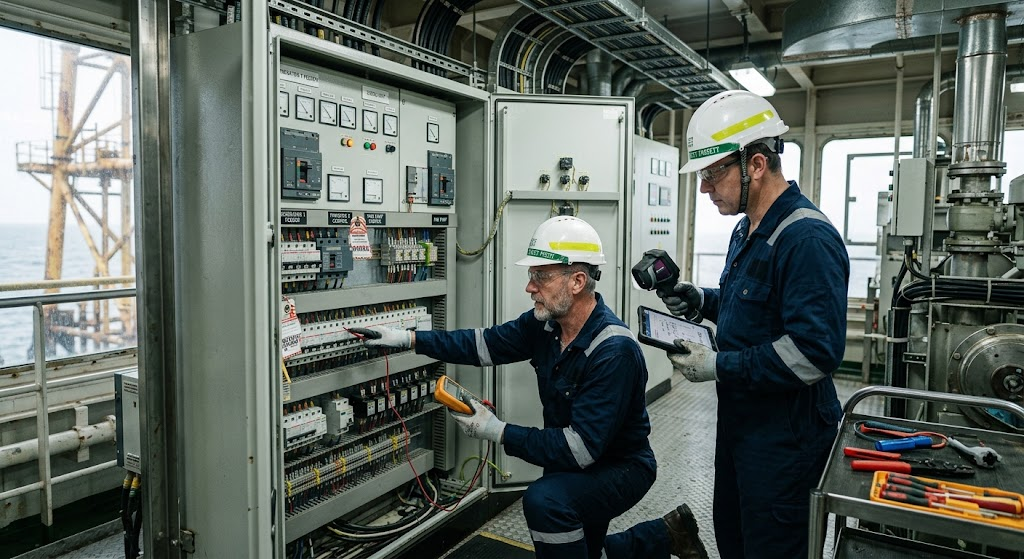
Modern marine and offshore operations depend on electrical systems more than ever. From generators and switchboards to motors, control panels, navigation equipment, cranes, and emergency systems, electrical power keeps critical assets operating. However, harsh offshore conditions can accelerate electrical deterioration. Therefore, professional Offshore Electrical Maintenance has become essential for companies that want to protect safety,
-
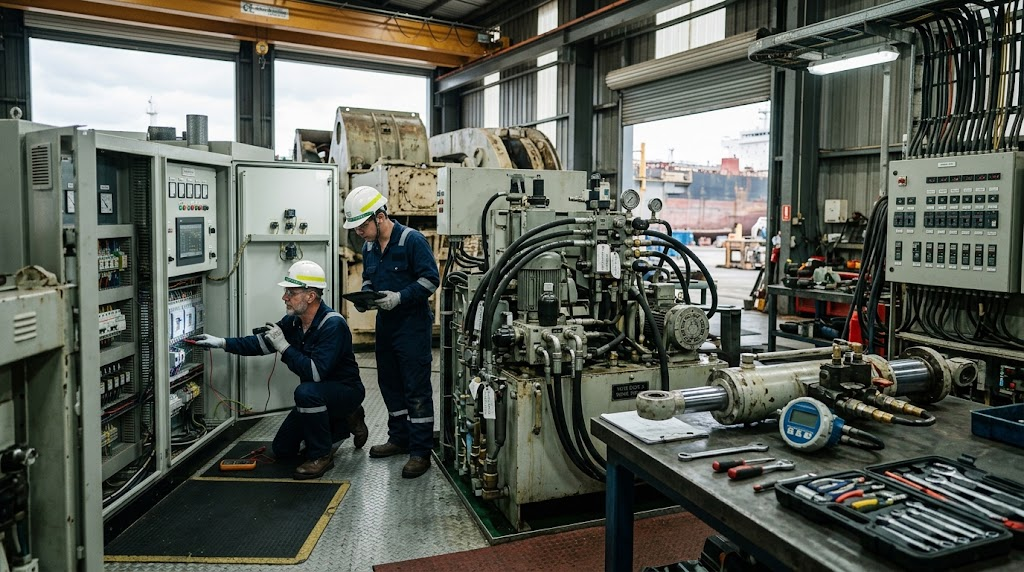
Modern marine and offshore operations demand more than powerful machinery. They require Hydraulic & Electrical System Services that keep critical equipment safe, responsive, and operational under demanding conditions. From ship deck cranes and winches to hydraulic power units, control panels, motors, and industrial machinery, system reliability directly affects productivity and operational safety. At the same
-
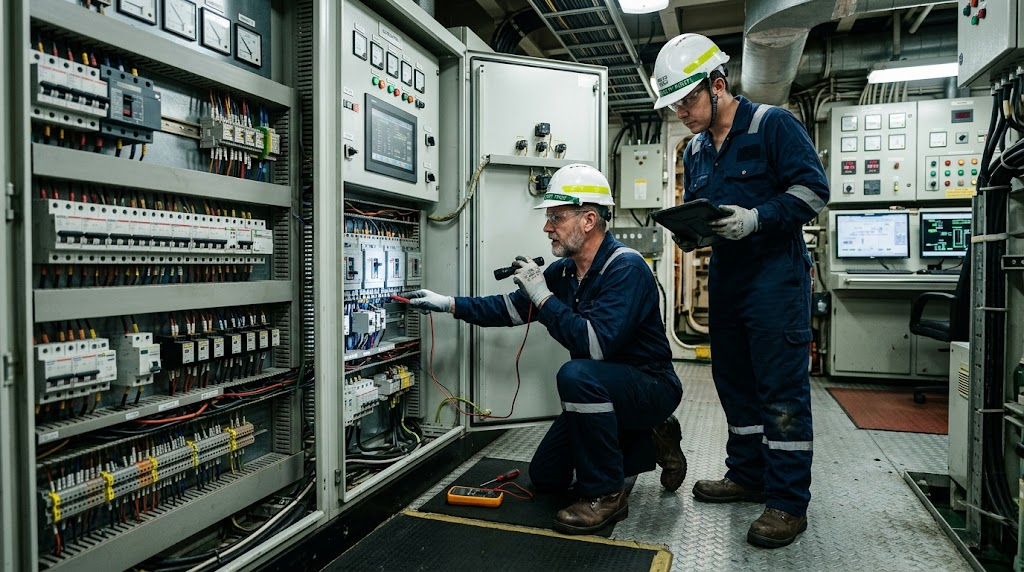
Modern vessels and offshore facilities are becoming more electrically dependent than ever. From navigation and communication systems to propulsion support, automation, lighting, power distribution, and safety equipment, electrical systems now play a central role in operational reliability. Marine Electrical Services are therefore no longer simply a maintenance requirement—they are a critical part of vessel safety,