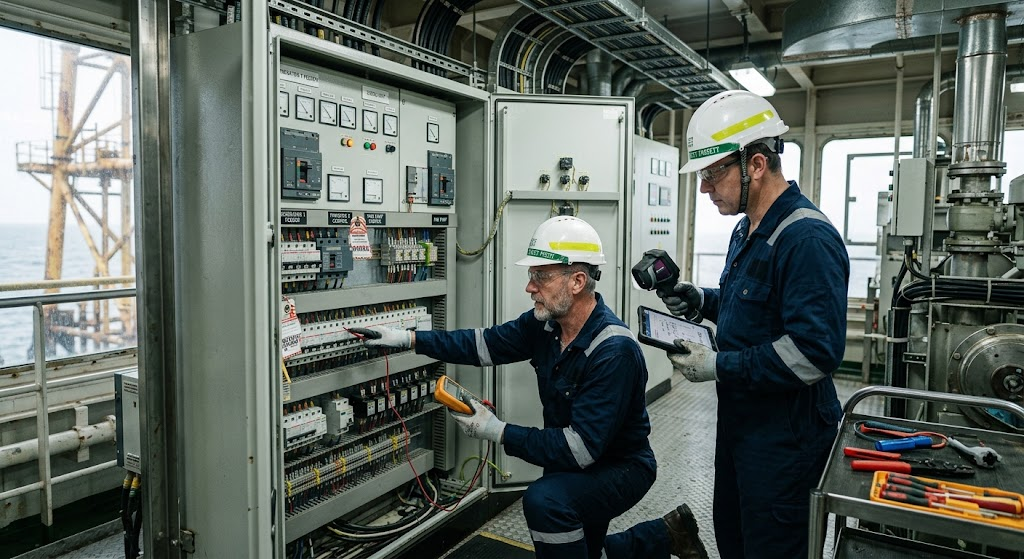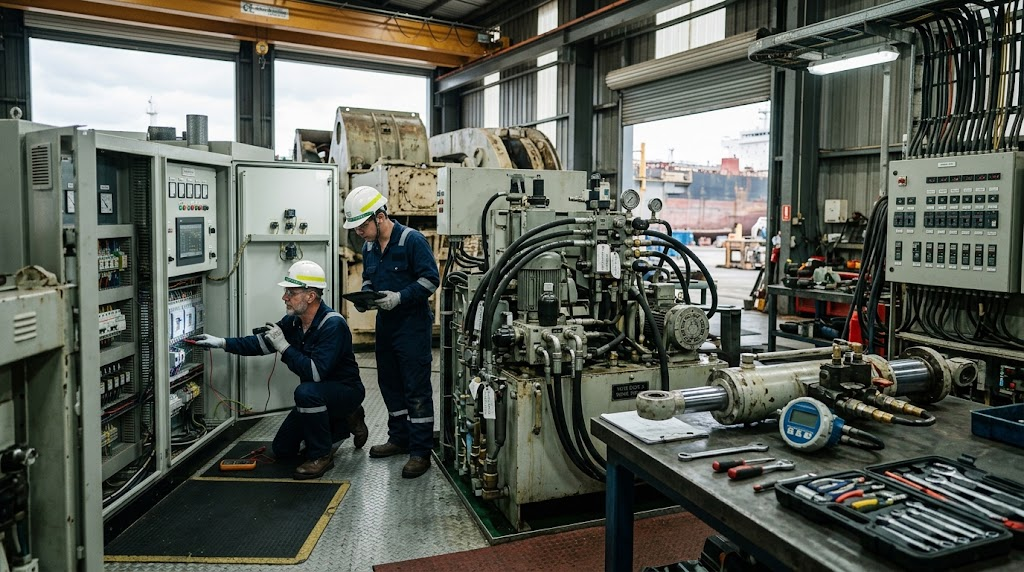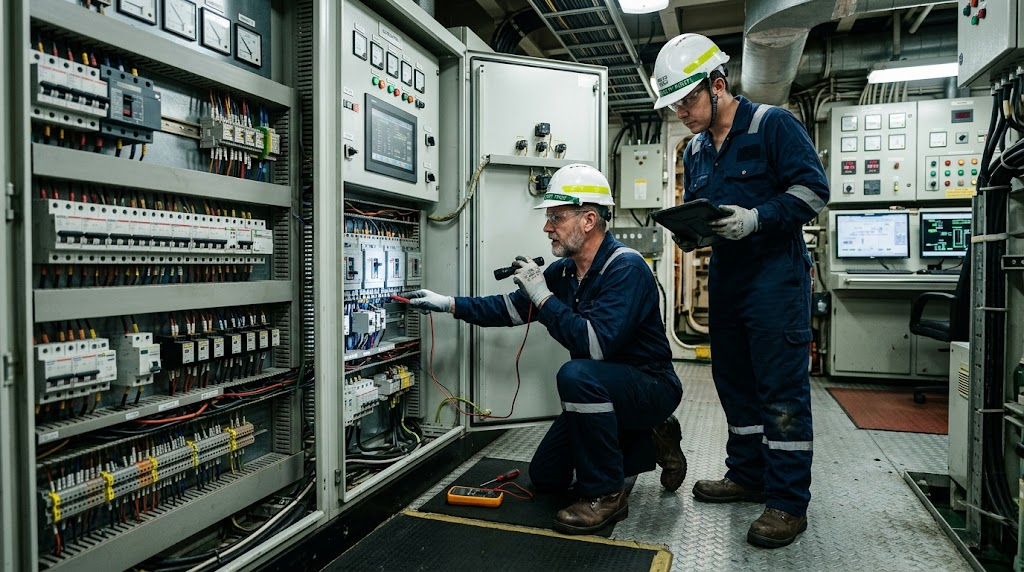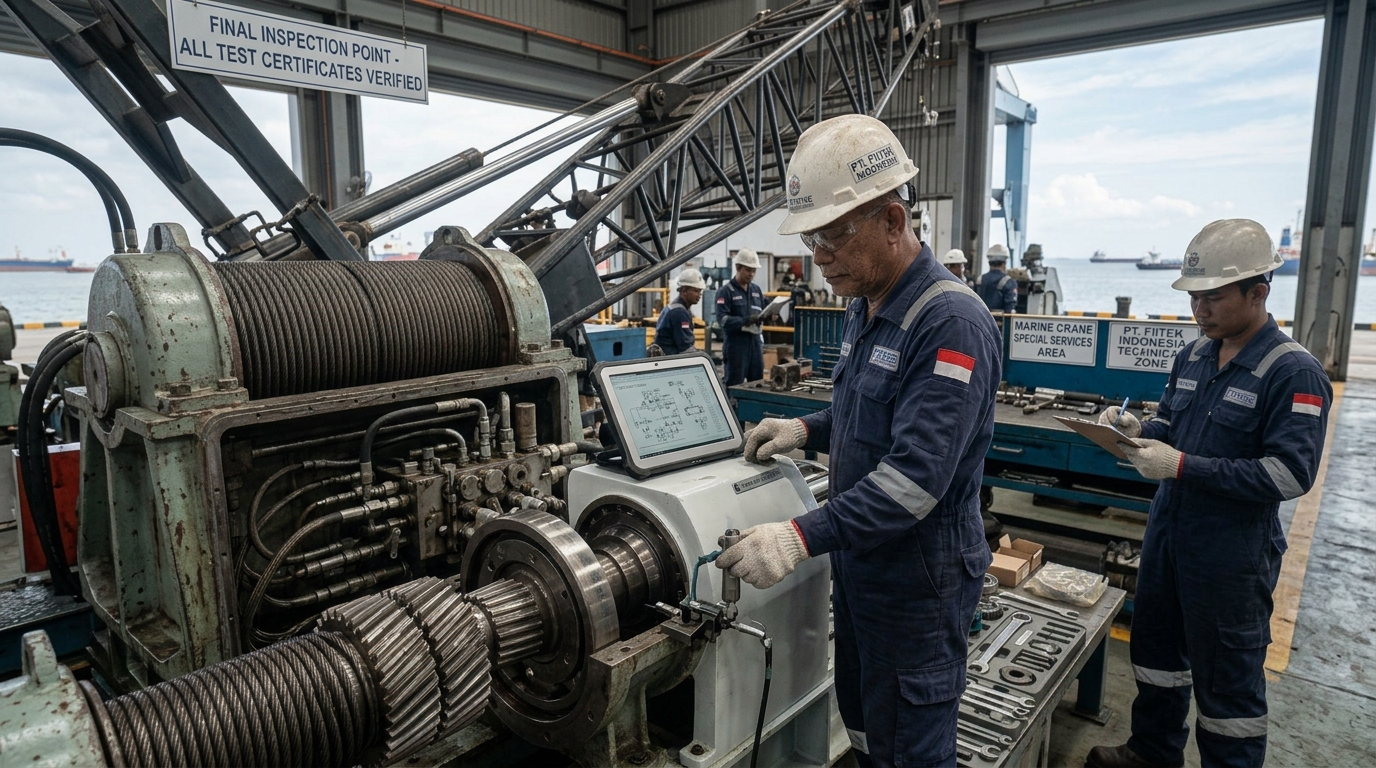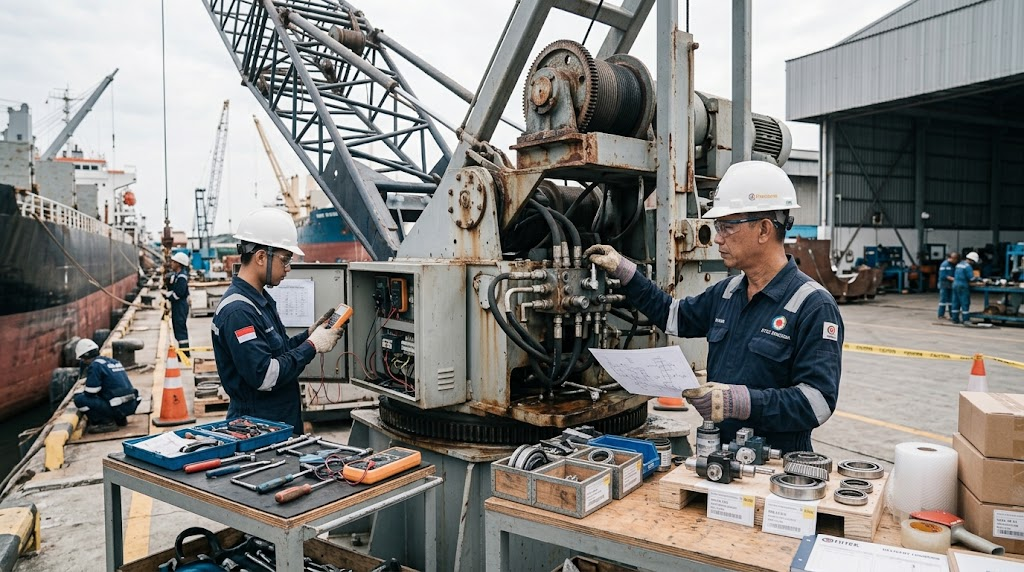
In marine, offshore, construction, and mining operations, cranes are essential for lifting, material handling, cargo movement, and other heavy-duty applications. Crane Repair and Service is therefore an important part of maintaining safe, reliable, and efficient lifting equipment. Regular inspection, preventive maintenance, troubleshooting, repair, and overhaul can help identify equipment problems before they develop into major failures and operational downtime.
Marine and offshore cranes operate under demanding conditions. Continuous loading, vibration, corrosion, saltwater exposure, hydraulic pressure, mechanical wear, and changing environmental conditions can affect crane components over time. Mechanical systems, hydraulic circuits, electrical controls, brakes, gearboxes, bearings, wire ropes, and structural components all require appropriate inspection and maintenance.
A crane problem does not always begin with a major failure. Unusual noise, hydraulic leakage, slow movement, abnormal vibration, brake problems, inaccurate positioning, or reduced lifting performance can be early indications that maintenance is required.
PT. FIITEK INDONESIA provides professional Crane Repair and Service solutions for marine, offshore, shipyard, construction, mining, and industrial applications, supported by multidisciplinary Hydraulic, Mechanical & Electrical capabilities.
Common Crane Problems in Marine and Offshore Operations
Marine and offshore cranes are exposed to demanding operating environments. Problems can develop gradually as components experience repeated loads, environmental exposure, contamination, and normal wear.
Mechanical Crane Problems
Mechanical components are continuously exposed to loads and movement during crane operation.
Common mechanical problems may include:
- Worn bearings
- Damaged gears
- Shaft wear
- Coupling problems
- Gearbox noise
- Excessive vibration
- Loose mechanical connections
- Worn bushings
- Brake component wear
- Slewing system problems
- Winch drum wear
Abnormal noise or vibration can be an indication of mechanical wear and should be investigated rather than ignored.
Gearbox Problems
Crane gearboxes transmit power and torque to different mechanisms. Long operating hours, insufficient lubrication, contamination, excessive loading, and component wear can affect gearbox performance.
Typical symptoms include:
- Abnormal operating noise
- Excessive vibration
- Oil leakage
- Overheating
- Reduced transmission efficiency
- Damaged gears
- Bearing deterioration
Depending on inspection findings, gearbox repair may involve disassembly, cleaning, dimensional inspection, bearing replacement, seal replacement, gear inspection, shaft inspection, lubrication system checks, and reassembly.
Hydraulic Crane Problems
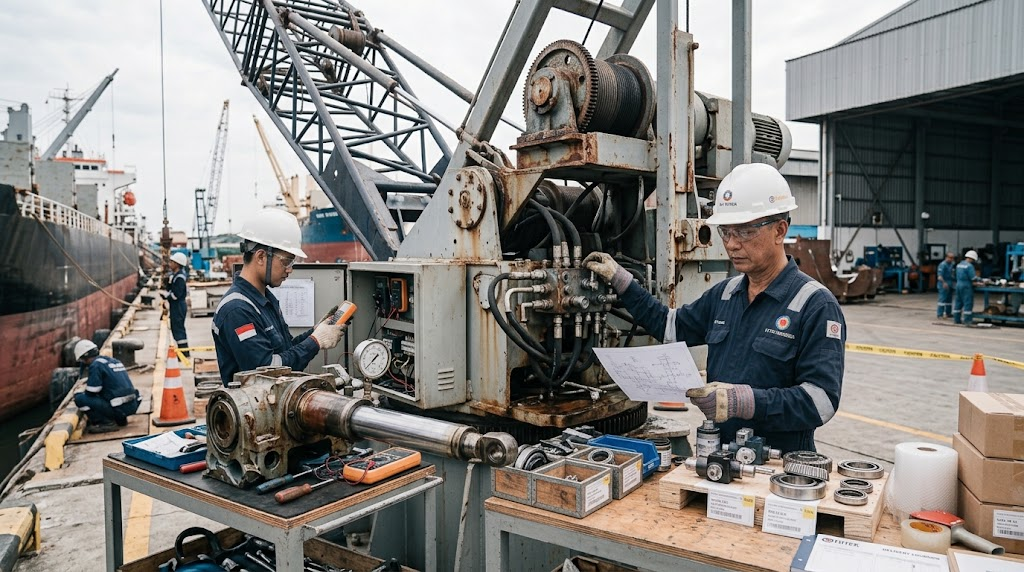
Hydraulic systems are commonly used in marine and offshore cranes for boom movement, luffing, slewing, winching, and other lifting functions.
Hydraulic problems can result from component wear, contamination, damaged seals, incorrect pressure, hose deterioration, or valve malfunction.
Common symptoms include:
- Hydraulic oil leakage
- Slow crane movement
- Unstable movement
- Pressure loss
- Excessive temperature
- Hydraulic pump noise
- Cylinder leakage
- Valve malfunction
- Damaged hydraulic hoses
- Reduced lifting performance
A proper hydraulic inspection should identify whether the problem originates from the pump, motor, valve, cylinder, hose, seal, control system, or another component.
Hydraulic Cylinder Repair
Hydraulic cylinders are important actuators in many crane systems. Damaged seals, piston rod wear, corrosion, scoring, and internal leakage can reduce cylinder performance.
Depending on the condition, hydraulic cylinder repair may include:
- Cylinder removal
- External cleaning
- Disassembly
- Seal inspection
- Piston and rod inspection
- Barrel inspection
- Replacement of damaged seals or components
- Reassembly
- Pressure testing
- Functional testing
The repair scope should be based on the actual condition of the cylinder and the manufacturer’s or equipment requirements where available.
Electrical and Control System Problems
Modern cranes rely on electrical systems for monitoring, control, protection, and equipment operation.
Electrical problems may affect crane movement, safety interlocks, sensors, limit switches, motors, control panels, and other systems.
Common issues include:
- Faulty sensors
- Damaged cables
- Loose electrical connections
- Limit switch problems
- Contactor failure
- Relay problems
- Motor issues
- Control panel faults
- Electrical overheating
- Intermittent signals
Electrical troubleshooting should be performed systematically to identify the source of the fault rather than replacing components without proper diagnosis.
Crane Brake System Inspection and Repair
The braking system is a critical part of crane operation because it helps control and hold loads during lifting and lowering activities.
Brake problems may include:
- Excessive brake wear
- Reduced braking performance
- Contaminated brake surfaces
- Hydraulic or pneumatic brake problems
- Incorrect adjustment
- Damaged brake components
- Abnormal brake noise
During Crane Repair and Service, brake components should be inspected according to the equipment design and applicable maintenance requirements.
Crane Wire Rope and Drum Inspection
Wire ropes are exposed to repeated bending, tension, abrasion, corrosion, and mechanical stress.
Regular inspection can help identify:
- Broken wires
- Corrosion
- Kinking
- Flattening
- Abrasion
- Birdcaging
- Uneven winding
- Lubrication problems
- Rope deformation
The crane drum should also be inspected for wear, alignment, surface condition, and correct wire-rope winding.
Any wire-rope replacement should follow the crane manufacturer’s specifications and applicable lifting-equipment requirements.
Crane Repair and Service Process
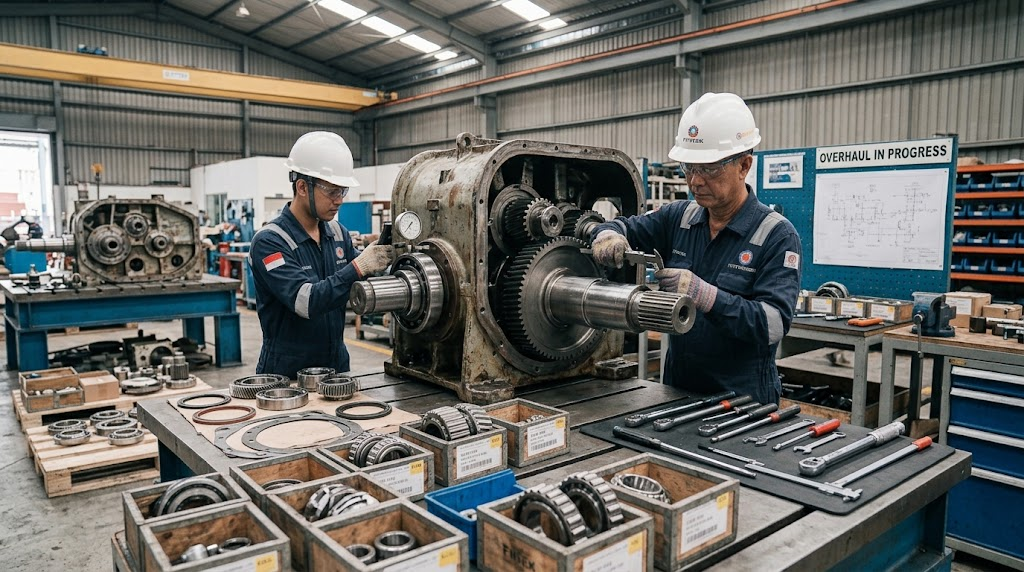
A professional repair process should begin with technical assessment rather than immediately replacing components.
1. Initial Inspection and Equipment Assessment
The first stage is to understand the condition of the crane and identify reported symptoms.
Inspection may include:
- Visual inspection
- Operational observation
- Mechanical inspection
- Hydraulic inspection
- Electrical inspection
- Structural inspection
- Lubrication condition
- Leakage inspection
- Brake inspection
- Wire-rope condition
- Gearbox condition
Available maintenance records, equipment manuals, drawings, and previous repair information can also provide useful technical background.
2. Troubleshooting and Fault Identification
After the initial inspection, technicians can investigate the source of the problem.
For example, slow crane movement could be related to hydraulic pressure, pump performance, valve condition, cylinder leakage, electrical controls, or mechanical resistance.
A systematic troubleshooting approach helps avoid unnecessary component replacement and provides a better understanding of the actual equipment condition.
3. Dismantling and Component Inspection
When repair or overhaul is required, affected components may need to be dismantled.
Depending on the equipment, this can involve:
- Gearboxes
- Hydraulic pumps
- Hydraulic motors
- Cylinders
- Valves
- Bearings
- Shafts
- Couplings
- Brakes
- Winch components
- Electrical components
Components should be cleaned and inspected before determining whether they can be reused, repaired, or replaced.
4. Repair and Component Replacement
The repair scope depends on inspection results.
Potential activities include:
- Bearing replacement
- Seal replacement
- Gear repair or replacement
- Shaft inspection and repair
- Hydraulic hose replacement
- Valve servicing
- Cylinder repair
- Brake servicing
- Coupling replacement
- Electrical component replacement
- Lubrication-system servicing
Where replacement components are required, correct technical specifications and compatibility should be considered.
5. Reassembly and Alignment
After repair, components are carefully reassembled according to the equipment configuration.
Mechanical alignment is particularly important for rotating equipment, gearboxes, shafts, couplings, and winch systems.
Improper alignment can contribute to:
- Excessive vibration
- Premature bearing wear
- Coupling damage
- Gear wear
- Increased operating temperature
- Reduced equipment life
6. Testing and Functional Verification
Following repair and reassembly, the crane should undergo appropriate testing and functional checks.
Depending on the equipment and scope of work, testing may include:
- Hydraulic pressure checks
- Leak inspection
- Electrical function checks
- Brake operation
- Winch operation
- Slewing operation
- Boom movement
- Control-system testing
- No-load functional testing
- Load testing where required and appropriately authorized
The purpose is to verify that repaired systems operate correctly before the equipment returns to normal service.
Crane Overhaul Services
Repair addresses specific problems, while an overhaul may involve a more comprehensive inspection and refurbishment of major crane systems.
A crane overhaul may be considered when equipment has accumulated significant operating hours, experienced repeated failures, or requires comprehensive refurbishment.
Mechanical Overhaul
Mechanical overhaul may include:
- Gearbox inspection
- Bearing replacement
- Gear inspection
- Shaft inspection
- Coupling inspection
- Brake overhaul
- Winch inspection
- Slewing mechanism inspection
- Lubrication-system inspection
Hydraulic Overhaul
Hydraulic overhaul may include:
- Pump inspection
- Hydraulic motor inspection
- Valve servicing
- Cylinder overhaul
- Seal replacement
- Hose replacement
- Hydraulic oil inspection
- Filter replacement
- Pressure testing
Electrical Overhaul
Electrical work may include:
- Motor inspection
- Control panel inspection
- Sensor testing
- Limit switch inspection
- Cable inspection
- Relay and contactor checks
- Electrical connection inspection
- Control-system troubleshooting
The actual overhaul scope should always be determined according to equipment condition, technical requirements, operating history, and inspection findings.
On-Site Crane Repair and Workshop Service
Crane maintenance requirements can vary depending on the location and operational situation.
On-Site Crane Repair
On-site service can be practical when equipment is installed on:
- Vessels
- Offshore facilities
- Shipyards
- Construction sites
- Mining sites
- Industrial facilities
On-site troubleshooting can help reduce unnecessary equipment transportation and may allow certain repairs to be completed directly at the operating location, depending on the complexity of the work.
Workshop Crane Repair
Components that require detailed dismantling, machining, refurbishment, or controlled inspection may be transferred to a suitable workshop.
Workshop activities can provide an appropriate environment for:
- Gearbox overhaul
- Hydraulic cylinder repair
- Component cleaning
- Bearing replacement
- Mechanical inspection
- Shaft repair
- Component refurbishment
- Testing and reassembly
Why Choose PT. FIITEK INDONESIA?
Choosing a technical service provider for crane maintenance requires consideration of equipment knowledge, repair capability, and understanding of the operating environment.
Hydraulic, Mechanical & Electrical Capabilities
Crane systems combine multiple technical disciplines. A hydraulic problem may affect mechanical performance, while an electrical control problem can influence hydraulic or mechanical functions.
PT. FIITEK INDONESIA provides multidisciplinary technical capabilities covering:
- Hydraulic systems
- Mechanical systems
- Electrical systems
- Crane machinery
- Winches
- Gearboxes
- Hydraulic cylinders
- Pumps and motors
- Control components
This integrated approach can help provide a more complete assessment of crane problems.
Marine and Offshore Experience
Marine and offshore equipment operates under conditions that differ from many land-based applications.
Saltwater, humidity, vibration, heavy loads, limited working space, and continuous operation can influence maintenance requirements.
Understanding these conditions is important when planning Crane Repair and Service.
Flexible Service Approach
Depending on the equipment and project requirements, repair work may be performed on-site or through workshop-based maintenance.
The service approach can be adjusted according to equipment condition, location, repair complexity, and operational requirements.
Support for Repair and Maintenance Projects
PT. FIITEK INDONESIA can support crane-related maintenance requirements ranging from troubleshooting and component repair to more comprehensive overhaul activities.
Importance of Periodic Crane Maintenance
Preventive maintenance is one of the most effective ways to identify developing equipment problems before they become major failures.
A periodic maintenance program may include:
Daily or Routine Checks
- Hydraulic leakage
- Abnormal noise
- Unusual vibration
- Wire-rope condition
- Brake condition
- Visible structural damage
- Oil levels
- Control functions
Periodic Inspection
- Bearings
- Gearboxes
- Hydraulic pumps
- Hydraulic cylinders
- Valves
- Motors
- Electrical systems
- Limit switches
- Couplings
- Braking systems
- Structural components
Planned Overhaul
Major components can be inspected and refurbished based on operating hours, equipment condition, manufacturer recommendations, inspection results, and operational requirements.
Benefits of a Preventive Crane Maintenance Program
A structured maintenance program can provide several operational benefits.
Reduced Unplanned Downtime
Early identification of worn or damaged components can help maintenance teams plan corrective work before a serious failure occurs.
Better Equipment Reliability
Regular inspection and appropriate repair can help maintain the operating condition of critical crane systems.
Longer Component Service Life
Correct lubrication, alignment, adjustment, and timely replacement can reduce unnecessary stress on components.
Improved Maintenance Planning
Planned maintenance allows companies to prepare manpower, spare parts, tools, and equipment before repair work begins.
Better Operational Readiness
Reliable crane performance supports lifting, cargo handling, construction, offshore support, and other industrial activities.
Crane Repair and Service for Marine, Offshore, Construction & Mining
Although crane applications vary between industries, the fundamental maintenance requirements remain closely related.
Marine Industry
Marine cranes are used for cargo handling, deck operations, stores handling, maintenance activities, and other vessel operations.
Offshore Industry
Offshore cranes support material handling, equipment transfer, maintenance activities, and offshore logistics.
Construction Industry
Construction cranes and lifting equipment operate under repeated heavy loads and require appropriate mechanical, hydraulic, electrical, and structural maintenance.
Mining Industry
Mining operations use heavy-duty lifting equipment in demanding environments where dust, vibration, heavy loads, and continuous operation can accelerate component wear.
For all these applications, professional Crane Repair and Service can contribute to equipment reliability and operational continuity.
Practical Crane Maintenance Recommendations
To maintain crane performance, operators and maintenance teams should consider several practical measures:
- Follow the equipment manufacturer’s maintenance recommendations where available.
- Perform routine visual and operational inspections.
- Monitor hydraulic leakage and operating pressure.
- Check gearbox lubrication and abnormal noise.
- Inspect bearings, shafts, gears, and couplings.
- Monitor brake performance.
- Inspect wire ropes and drums regularly.
- Check electrical controls, sensors, and limit switches.
- Record maintenance findings and component replacements.
- Plan repair and overhaul before critical components reach severe failure conditions.
A maintenance history can also help identify recurring problems and support better long-term maintenance planning.
Professional Crane Repair and Service by PT. FIITEK INDONESIA
Crane reliability is important for marine, offshore, construction, mining, and industrial operations where lifting equipment plays a critical role in daily activities.
Mechanical wear, hydraulic leakage, electrical faults, gearbox problems, brake deterioration, wire-rope damage, and control-system issues can all affect crane performance. Early inspection and appropriate maintenance can help prevent minor problems from developing into costly equipment failures.
PT. FIITEK INDONESIA provides professional Crane Repair and Service solutions supported by Hydraulic, Mechanical & Electrical capabilities.
Our services can support crane inspection, troubleshooting, repair, component replacement, hydraulic servicing, mechanical repair, electrical troubleshooting, gearbox overhaul, brake maintenance, and other crane maintenance requirements according to equipment condition and project needs.
Need Professional Crane Repair and Service?
If your crane is experiencing hydraulic leakage, abnormal noise, vibration, reduced lifting performance, electrical faults, brake problems, gearbox issues, or other operational concerns, professional inspection can help identify the underlying problem.
PT. FIITEK INDONESIA is ready to support your crane maintenance and repair requirements for marine, offshore, shipyard, construction, mining, and industrial applications.
Send us your crane manufacturer, model, equipment details, photographs, nameplate information, reported symptoms, or maintenance requirements for an initial technical discussion.
PT. FIITEK INDONESIA
Hydraulic, Mechanical & Electrical Specialists for Marine & Offshore Industries
Contact PT. FIITEK INDONESIA today for professional Crane Repair and Service and technical support.
Reliable Maintenance. Professional Service. Better Equipment Readiness.
STAY IN THE LOOP
Subscribe to our free newsletter.
Leave A Comment

Modern marine and offshore operations depend on electrical systems more than ever. From generators and switchboards to motors, control panels, navigation equipment, cranes, and emergency systems, electrical power keeps critical assets operating. However, harsh offshore conditions can accelerate electrical deterioration. Therefore, professional Offshore Electrical Maintenance has become essential for companies that want to protect safety,

Modern marine and offshore operations demand more than powerful machinery. They require Hydraulic & Electrical System Services that keep critical equipment safe, responsive, and operational under demanding conditions. From ship deck cranes and winches to hydraulic power units, control panels, motors, and industrial machinery, system reliability directly affects productivity and operational safety. At the same
-
Modern vessels and offshore facilities are becoming more electrically dependent than ever. From navigation and communication systems to propulsion support, automation, lighting, power distribution, and safety equipment, electrical systems now play a central role in operational reliability. Marine Electrical Services are therefore no longer simply a maintenance requirement—they are a critical part of vessel safety,

In high-stakes marine, offshore, construction, and mining operations, reliable lifting equipment is vital to maintaining productivity and operational safety. Specialized Crane Repair and Maintenance Services are essential to ensuring continuous performance—especially when machinery is exposed to heavy loads, continuous operation, vibration, saltwater corrosion, and harsh weather. Marine and offshore cranes are sophisticated machines integrating mechanical,